
A polished reception desk and a freshly mopped floor can
create a good first impression. But for a medical or dental clinic,
appearance is only the beginning. The more important questions are
harder to see: Which high-touch surfaces were cleaned? Was the right
method used? Were any areas missed? When is the next service due – and
can the practice manager verify the answers without chasing a cleaner
after hours?
Those questions matter because environmental cleaning is part of
infection prevention and control. It does not replace hand hygiene,
clinical precautions, instrument reprocessing or good ventilation. It
does, however, reduce contamination in the care environment and gives a
practice a repeatable way to manage surfaces touched by patients,
clinicians, staff and visitors.
For Melbourne clinics, the logical response is not an occasional deep
clean when the premises look tired. It is a regular, risk-based cleaning
program delivered by people who understand the site – with records that
make completion visible. That is the difference between hoping a clinic
was cleaned and being able to check.
The risk is not limited to
hospitals
The National
Health and Medical Research Council (NHMRC) states that
healthcare-associated infections can occur in any healthcare setting,
including general practices, dental clinics and community health
facilities. The guidelines are intended for healthcare workers, managers
and support staff, and they call for each setting to apply a
risk-management approach appropriate to its circumstances.
That does not mean every person who enters a clinic will become ill,
or that a contaminated surface automatically causes infection.
Transmission depends on the organism, the route of exposure, the
patient, the procedure and the wider infection-control system. The
defensible conclusion is narrower and more useful: environmental
surfaces are a controllable part of the risk, and leaving their
maintenance to memory or visual appearance is a weak system.
Why “the cleaner
came last night” is not enough
Most cleaning happens when the practice manager is not standing
beside the cleaner. By opening time, the floor may be dry and the bins
empty, but the manager may still have no simple answer to five
operational questions:
- Which rooms and touchpoints were included in the agreed
scope? - Which tasks were completed, and which could not be
completed? - What cleaning method or product approach was used?
- Is there evidence for the areas that matter most?
- When is the next scheduled service?
A paper sign-off sheet can help, but it is often stored out of sight,
updated inconsistently or separated from photographs and the current
schedule. If the cleaning record cannot be checked quickly,
accountability becomes a phone call, an email trail or an
assumption.
What current Australian
guidance says
The current official PDF of the Australian
Guidelines for the Prevention and Control of Infection in
Healthcare (version 11.27, published 8 April 2026) says
frequently touched surfaces should be cleaned with detergent solution at
least daily, when visibly soiled and after known contamination. General
surfaces and fittings should be cleaned when visibly soiled and
immediately after spills. Shared clinical equipment should be cleaned
between patient uses and disinfected where indicated, subject to risk
assessment.
The same guidance explains that the method, thoroughness, frequency
and products used should be determined by risk analysis and reflected in
the healthcare facility’s policy. It recommends routine cleaning with
detergent and water, while disinfectants are used when indicated by the
contamination risk or outbreak circumstances. The Australian
Commission on Safety and Quality in Health Care maintains the
guideline and its current version.
This is why a blanket instruction such as “clean everything every
night” is not enough. A clinic needs a site-specific scope. Reception
touchpoints, patient bathrooms, staff kitchens, floors and
treatment-area environmental surfaces do not all carry the same risk or
require the same frequency. Nor should a commercial cleaner guess where
the practice draws the boundary between facility cleaning and
clinical-team responsibilities.
Where ad
hoc cleaning arrangements tend to break down
The problem is usually not a lack of goodwill. It is the lack of a
controlled system. Common gaps include:
- a changing list of tasks that lives in one person’s
memory - unclear responsibility for chair-side, reception and shared staff
areas - high-touch points being missed because a room already looks
tidy - the wrong product, dilution or method being used on a sensitive
surface - no clear escalation when access is blocked, supplies are missing
or contamination is found - no reliable record for the practice manager to review the next
morning
A one-off deep clean can improve presentation, but it cannot create
day-to-day consistency. In a working clinic, new patient traffic, staff
use, spills and touchpoint contamination continue after the deep clean
is finished. The operational need is therefore recurring: a defined
schedule, a stable checklist and a way to confirm the work.
Why
regular trained professional cleaning is the logical response
Australian guidance does not say that every clinic must outsource its
environmental cleaning. A practice may use trained in-house staff, an
external provider or a combination. But where a clinic does not have a
dedicated environmental-services team, a regular professional cleaner is
a practical way to turn policy into repeatable action.
A well-designed recurring service can provide:
- Consistency – agreed tasks are scheduled instead of competing
with clinical workload. - Site knowledge – cleaners learn the practice layout, access
rules, sensitive surfaces and escalation contacts. - Method control – products and equipment are selected for the
task, surface and practice protocol rather than used
interchangeably. - Clear boundaries – the scope states what the cleaner handles and
what remains with clinical staff. - Accountability – incomplete or inaccessible areas can be recorded
instead of silently carried forward. - Management visibility – completion can be reviewed without
relying on a vague verbal assurance.
The
evidence favours a system, not a heroic once-off clean
In the Australian REACH trial,
11 acute-care hospitals introduced a structured environmental-cleaning
bundle focused on product use, technique, staff training, auditing with
feedback and communication. The intervention improved cleaning
thoroughness and showed promise for reducing vancomycin-resistant
enterococci infection.
This was a hospital study, so its infection results should not be
transferred directly to a suburban GP or dental practice. Its
operational lesson is still relevant: better cleaning is not just a
different bottle of chemical. It is a bundle of trained people, correct
technique, a defined process, monitoring and communication.
What a
clinic cleaning scope should actually cover
The final schedule should follow the practice’s own risk assessment
and infection-control policy. Depending on the site, an environmental
cleaning scope may include:
- Entry and reception: door handles, counters, seating, shared
pens, touchscreens and other frequent-contact points. - Waiting areas: chair arms, children’s corners where present,
tables and visible marks on walls or glass. - Consulting and treatment rooms: agreed non-critical environmental
surfaces, floors, sinks and touchpoints, with patient-to-patient
clinical cleaning responsibilities clearly assigned. - Patient bathrooms: toilets, basins, taps, dispensers, handles,
floors and replenishment checks. - Staff areas: kitchen surfaces, tables, switches, handles, floors
and bins. - General presentation: hard floors, carpet care, glass, edges,
skirtings, dust and waste streams within the agreed scope.
The schedule may need to change when patient volume changes, a room
is repurposed, seasonal respiratory illness increases, a known
contamination event occurs or an outbreak response is activated.
“Regular” should therefore mean planned and reviewable – not
inflexible.
The missing layer:
proof that stays visible
The Australian Commission describes environmental cleaning as a key
component of standard precautions and says auditing
cleaning practice is an important part of the process. For a
busy community clinic, useful oversight does not need to mean a manager
watching every task. It means making the right information easy to
verify.
Green Clean Melbourne’s live Cleaning and Hygiene Certificate adds
that visibility. A permanent QR code at the premises can show the
current cleaning status, completed areas and tasks, how the cleaning was
performed, proof photographs and the next scheduled service. Managers
can review the record remotely, while staff, patients and visitors can
see current information rather than relying on a general “we clean
regularly” statement.
The certificate is an operational transparency tool. It is not
government accreditation, a declaration that a clinic is sterile or a
guarantee that infection will not occur. It does not replace the
clinic’s infection-control plan, clinical audits, incident response,
instrument reprocessing or the responsibilities of registered health
practitioners. Its value is that it makes routine cleaning activity
visible, current and harder to overlook.
How
Green Clean Melbourne supports medical and dental practices
Green Clean
Melbourne provides commercial cleaning for clinics across
Melbourne, with regular schedules shaped around site size, access,
bathrooms, kitchens, frequency and required standards. The service
combines trained, police-checked cleaners with professional methods,
agreed site checklists, completion reporting and photo evidence.
Products are selected for the task: eco-conscious
and child-safe options are used where suitable, while healthcare
hygiene, surface compatibility and the practice’s own protocol remain
the priority. That matters because “eco-friendly” should never be
treated as a substitute for fit-for-purpose cleaning.
The team can support agreed environmental and non-clinical cleaning
areas. It does not reprocess instruments, sterilise reusable medical
devices or replace patient-to-patient clinical cleaning assigned to
healthcare staff. Defining this boundary at quotation stage protects
both the clinic and the cleaning team.
Seven
questions to ask before choosing a clinic cleaner
- Will you build the scope around our rooms, touchpoints, patient
flow and infection-control policy? - Which tasks are completed by your cleaners, and which must remain
with our clinical team? - How do you train and screen the people entering our
practice? - How do you prevent cross-use of cloths, equipment or products
between incompatible areas? - How are product selection, dilution, surface compatibility and
safety instructions managed? - What happens if a room is inaccessible, a task cannot be
completed or contamination is found? - Can we verify completed tasks, proof photos and the next service
without waiting for an email?
Make clinic cleaning
visible, not assumed
If your medical centre or dental practice relies on a vague
checklist, irregular visits or a simple “done” message, the system is
asking managers to trust what they cannot see. Green Clean Melbourne can
design a regular site-specific cleaning scope and pair it with
documented checklists, photo evidence and a live QR Cleaning and Hygiene
Certificate.
Request a
commercial cleaning quote or call 03 7065 6552 to discuss your
clinic, operating hours and required frequency. We will clarify the
environmental-cleaning scope, the clinical boundaries and the evidence
your management team needs.
Sources
- Australian
Guidelines for the Prevention and Control of Infection in Healthcare –
current official PDF, version 11.27 (8 April 2026) - NHMRC:
Australian Guidelines for the Prevention and Control of Infection in
Healthcare - Australian
Commission on Safety and Quality in Health Care: Principles of
Environmental Cleaning Auditing - Australian
Commission on Safety and Quality in Health Care: Primary and Community
Healthcare Standards - Australian
Dental Association: Infection Prevention and Control - Mitchell
BG et al. (2019): REACH multicentre randomised trial - Green
Clean Melbourne: Commercial Cleaning - Green Clean
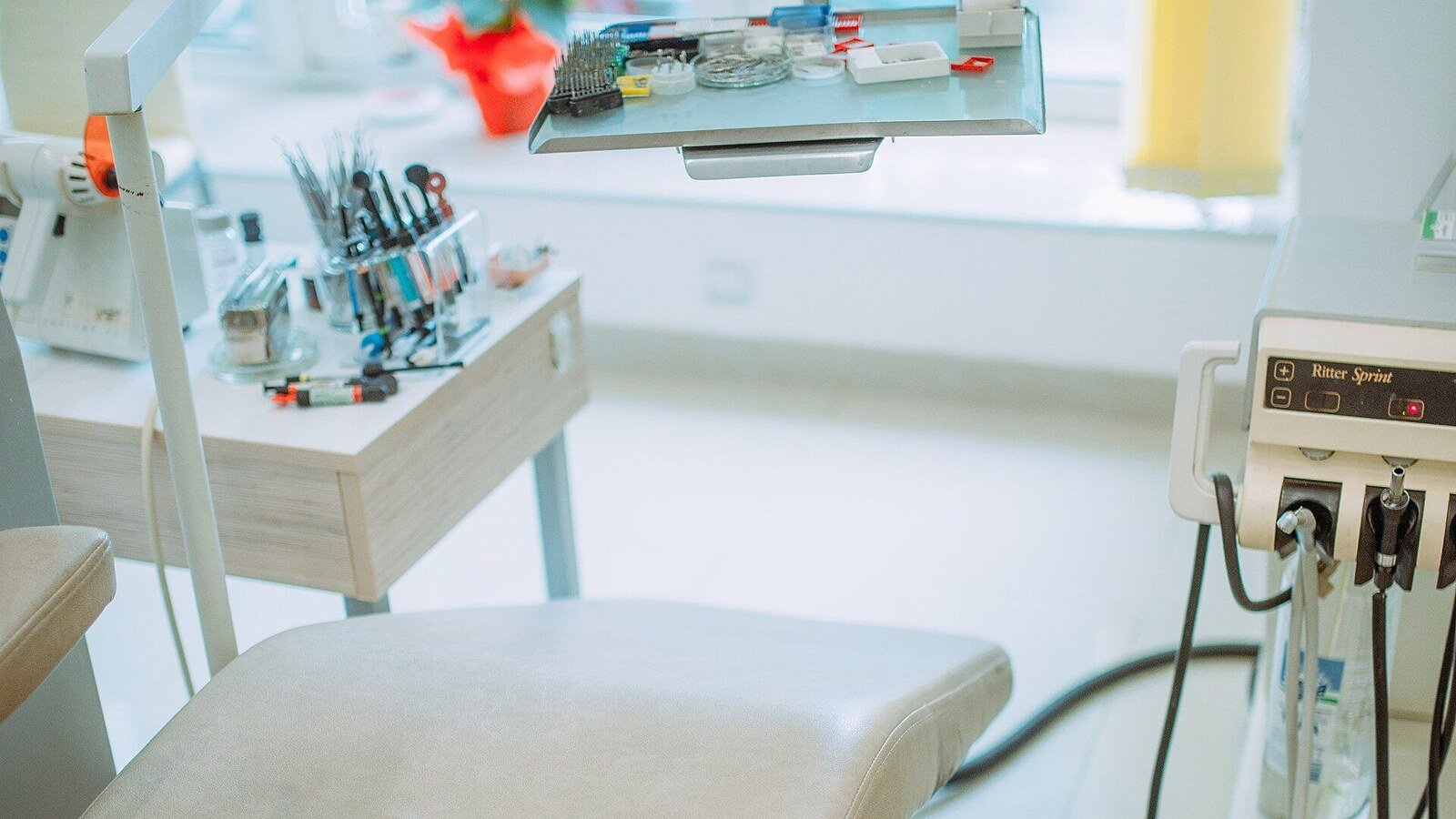
Melbourne: Why Choose Us - Wikimedia Commons photo: Modern dental treatment room by Nenad Stojković/Shixart1985
- Creative Commons Attribution 2.0 licence
Publication note: This article provides general information about
environmental cleaning. Each healthcare practice should apply current
Australian guidance, professional obligations and its own risk
assessment. Green Clean Melbourne’s service scope should be agreed in
writing before work begins.