
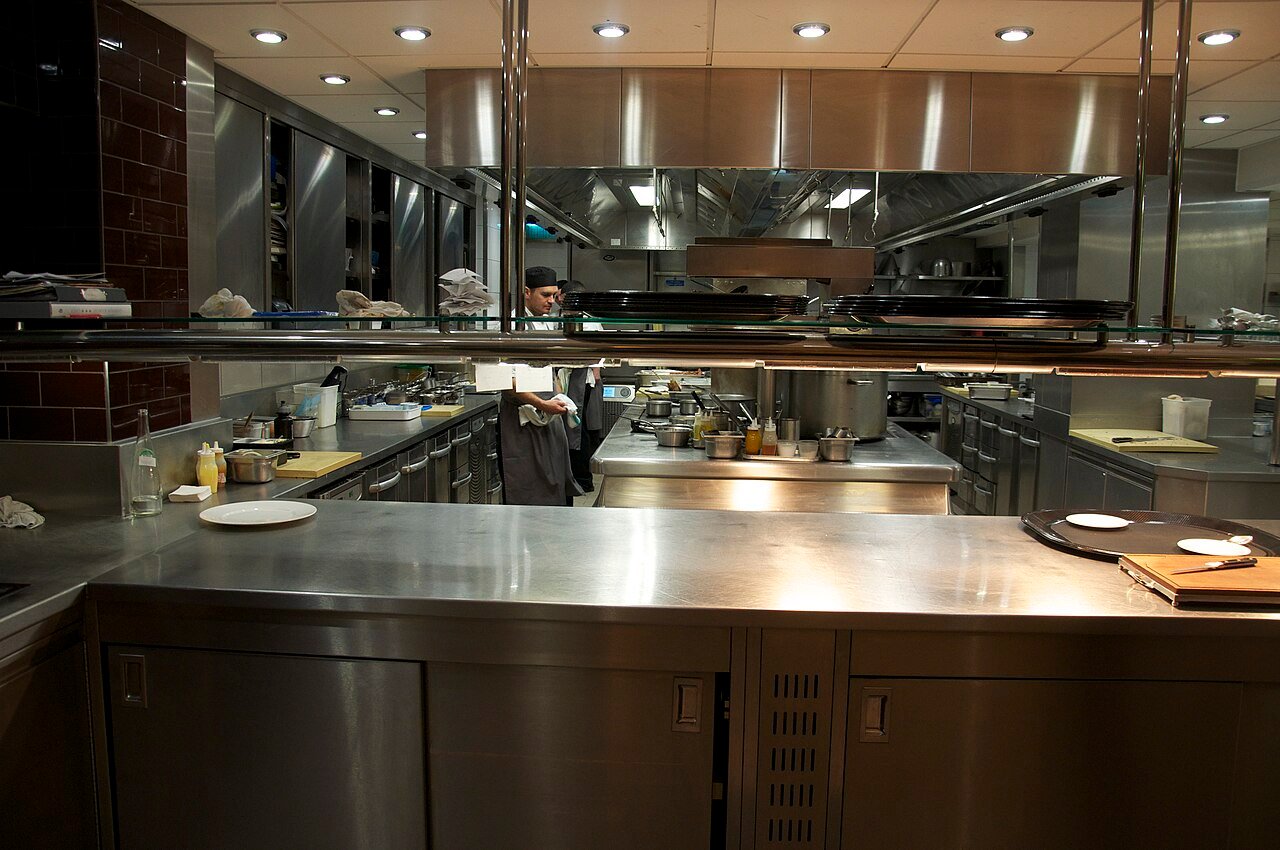
At the end of service, the benches may look tidy and the floor may
have been mopped. But “the kitchen is done” leaves an important question
unanswered: what was actually cleaned, and what was sanitised?
For a café, restaurant or catering business, that distinction
matters. Victoria’s Department of Health warns that equipment can look
clean while still transferring bacteria or other organisms to food.
Appearance is useful for checking visible dirt; it is not proof that a
surface has been sanitised. Victorian Department of
Health
The practical response is not simply a stronger spray. It is a
repeatable cleaning plan, enough time to carry it out, and a clear
handover between kitchen staff and professional cleaners.
Cleaning and
sanitising solve different problems
Cleaning removes grease, food waste and other contamination.
Sanitising is a separate process that reduces microorganisms to a safe
level. Food preparation surfaces need to be thoroughly cleaned before
sanitising can work effectively. DoFoodSafely:
cleaning and sanitising
Timing matters too. Victorian guidance calls for cleaning and
sanitising between uses, particularly when moving from raw food to
ready-to-eat food preparation. It also highlights equipment with
difficult-to-reach surfaces, including slicers, blenders and can
openers. These cannot be treated as if a wipe across the outside reaches
every food-contact component. Victorian Department of
Health
This is why a scheduled professional clean must complement, not
replace, the kitchen team’s during-service routines. An after-hours
visit cannot retrospectively correct a missed cleaning step between two
food preparation tasks.
The
operational gap: “someone cleans it” is not a plan
Consider a closing checklist that says only “clean kitchen”. Does
that include the equipment handles, splashbacks and edges of benches?
Who checks the finished work? What happens when a surface cannot be
accessed safely?
Those are management questions, not reasons to blame a busy team.
They are also why an agreed scope is more useful than a general
promise.
For your next cleaning review, ask for a plan that identifies:
- Each area or item included, rather than one broad room-level
tick. - Which tasks belong to kitchen staff during service and which belong
to the cleaning contractor. - The method and suitable products for each task.
- The service frequency, completion check and process for reporting
missed or inaccessible areas.
Victoria’s DoFoodSafely guidance explicitly describes cleaning
schedules in terms of who cleans what, when and how. Turning those
instructions into a site-specific handover is a practical way to make
responsibility visible. DoFoodSafely
Eco-conscious
choices still need to be fit for purpose
Responsible product selection is not a choice between caring about
chemical exposure and taking hygiene seriously. The product needs to
suit its intended task, and the person using it needs to follow the
instructions.
For food preparation equipment, use food-safe detergents and
sanitisers. Follow the specified dilution and contact time, never mix
chemicals, and keep cleaning chemicals away from food storage. Using
extra chemical does not automatically improve the result. DoFoodSafely
Nor should a familiar household ingredient be assumed to be an
effective sanitiser: Victorian guidance specifically warns against
relying on vinegar or lemon juice for this purpose. Victorian Department of
Health
The sensible standard is suitable products, trained use and
consistent methods—not an unsupported promise of a chemical-free or
risk-free kitchen.
Where
professional kitchen cleaning adds value
If your team cannot reliably complete the agreed scope within the
time available, regular professional support is a practical next step.
Book for the work your premises actually require, rather than waiting
until a rushed clean becomes the only option.
Green Clean Melbourne’s commercial kitchen service covers stainless
steel benches, splashbacks, back-of-house floors, external equipment
surfaces and grease-prone touchpoints. After-hours options are
available. Specialist canopy or compliance work requires its own scope
clarification; it should not be assumed to be part of a standard kitchen
clean. Commercial
kitchen cleaning
Our approach brings trained, police-checked cleaners together with
agreed site checklists, professional methods and eco-conscious products
where suitable. Our child-safe approach is relevant where children use
the premises, while food-area product selection must remain appropriate
to the task. Completion notes and photographs can be provided for
commercial clients. Our published
service approach
Make the
cleaning record visible—not just the promise
For sites using Green Clean Melbourne’s live Cleaning and Hygiene
Certificate, the permanent QR code provides access to the current
published cleaning record: completed areas and tasks, recorded methods,
approved proof photographs and the next scheduled service. Managers,
staff and visitors can review the available record without chasing a
verbal update.
That visibility supports accountability, but it has a clear limit. A
service record documents reported work; a photograph cannot establish
microbial safety. The certificate is not government certification, a
food-safety inspection result or a guarantee that contamination cannot
occur after cleaning. Its value is making the cleaning service easier to
check and follow up.
Get a cleaning
scope your team can work with
A dependable kitchen cleaning arrangement starts with clear
responsibilities and an agreed standard of completion.
Send Green Clean Melbourne photos of your kitchen, your location,
operating hours and the areas you need covered. We will help define the
scope and quote for the work, including ongoing cleaning and reporting
requirements.
Request a
commercial kitchen cleaning quote or call 03 7065
6552.
Sources
Official primary guidance was used; no illness-reduction statistics
or observational causal claims are made.
- Victorian Department of Health, Cleaning and sanitising
for food businesses. Updated 20 December 2023; checked 11 September
2026. - Victorian Department of Health, DoFoodSafely
— Cleaning. Website reports last updated 26 February 2025; checked
11 September 2026. - Green Clean Melbourne, Commercial
kitchen cleaning, Why choose
us and Home.
Checked 11 September 2026.