
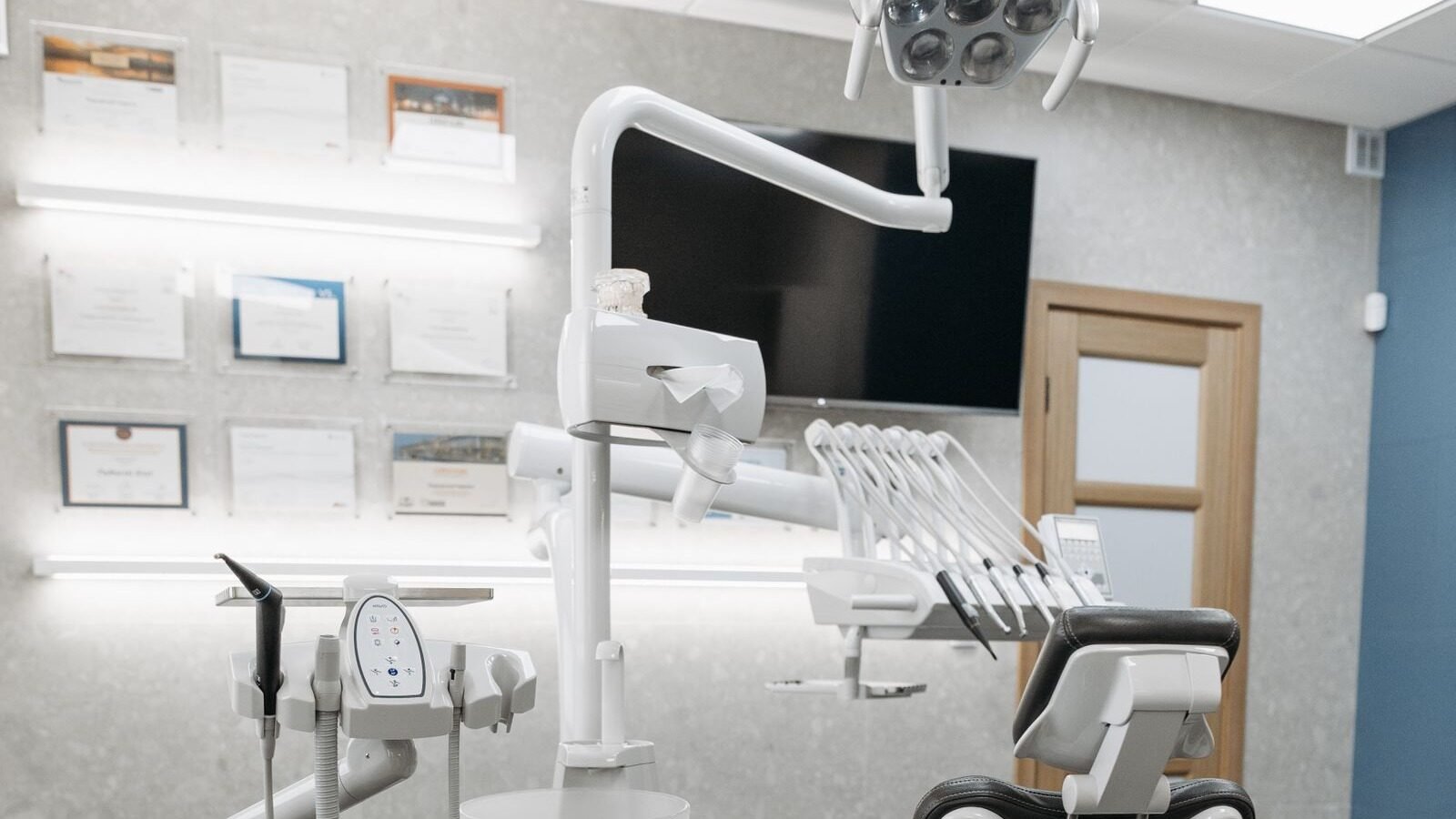
A dental practice can look spotless and still have gaps in its cleaning system.
Reception desks may shine, yet frequently touched door handles can be missed. Floors may be freshly mopped, while the telephone, light switches or waiting-room tablet fall outside anyone’s checklist. A cleaner may assume the dental team handles an area, while the dental team assumes it belongs to the cleaner.
That is why reliable dental clinic cleaning is not simply about “cleaning everything”. It begins with a written, site-specific plan that makes the boundaries, methods and responsibilities clear.
The Australian Dental Association’s current 2026 Guidelines for Infection Prevention and Control state that dental practices should have cleaning schedules specifying how often different areas are cleaned. The guidance expressly includes items such as windowsills, door handles, telephone handsets and dental equipment located where contamination may occur, including parts of X-ray and operating-light equipment (ADA, 2026).
A dental clinic has different cleaning zones—and different risks
Not every surface in a dental practice carries the same risk or requires the same response.
The treatment room contains clean and contaminated zones that must be clearly understood. Waiting rooms, staff areas, bathrooms, corridors and offices have different patterns of use. A sensible cleaning plan therefore considers what happens in each space, how often it is used, what people touch, and whether the dental practice or external cleaning team is responsible for it.
The ADA guidance recommends that surfaces outside the contaminated zone, such as operatory benchtops, be cleaned at least daily with a detergent-containing product. It also says that clinical contact surfaces within the contaminated zone that are not barrier-protected must be cleaned after every patient. Those are not interchangeable tasks (ADA, 2026).
This distinction matters when appointing a commercial cleaner. The scope should state exactly which clinical and non-clinical areas the cleaning company may enter, which surfaces it may handle, which approved products it must use, and which tasks remain exclusively with trained dental staff.
High-touch surfaces need deliberate attention
People repeatedly touch reception counters, EFTPOS terminals, door handles, chair arms, light switches, taps, bathroom fixtures and shared devices. These surfaces can act as indirect transfer points, so they should not be left to chance.
Current ADA guidance specifically identifies door handles, toys and tablet devices in waiting rooms as potential fomites and recommends regular cleaning based on a risk assessment. Its routine cleaning table also gives different frequencies for items according to the level of risk and location—for example, patient-room door handles are treated differently from general door handles (ADA, 2026).
A good dental clinic cleaning checklist should therefore name these items individually. A vague instruction such as “clean reception” is not enough to show that every relevant touchpoint has been considered.
Cleaning and disinfection are not the same task
Routine cleaning physically removes dust, soil and organic material. Disinfection uses a suitable agent under specified conditions to inactivate microorganisms. Using more disinfectant, or using it everywhere, does not automatically create a safer result.
For routine environmental cleaning, the ADA generally favours neutral or mildly alkaline detergent because it is less likely than strongly acidic or alkaline products to damage metals or irritate skin, and it leaves little residue. When transmission-based precautions apply, both cleaning and disinfection may be required—either as two steps or with an appropriate combined product. The required wet contact or drying time must be followed for the disinfectant to work as intended (ADA, 2026).
Products must be chosen for the actual surface and used according to the label and equipment manufacturer’s instructions. Dental-chair upholstery, screens, metals and specialised equipment can be damaged by an unsuitable chemical. The ADA also advises that environmental cleaning products used in this context should be listed on the Australian Register of Therapeutic Goods as a Class I medical device.
Avoid cleaning methods that spread contamination
Technique matters as much as product choice.
The ADA recommends damp dusting, dust-retaining mops and vacuum cleaners with HEPA-filtered exhaust. It advises against brooms in clinical areas because sweeping can disperse dust and bacteria into the air. Reusable cloths and mop heads must also be cleaned after use and allowed to dry, or replaced with single-use alternatives where appropriate (ADA, 2026).
The broader Australian Guidelines for the Prevention and Control of Infection in Healthcare apply across healthcare settings, including office-based dental practices. They emphasise a risk-management approach because the level of risk differs between settings and circumstances (NHMRC).
For a Melbourne dental clinic, that means the schedule should be reviewed when the practice layout, patient activity, public-health advice or identified risks change. A static checklist copied from another premises may overlook the way your clinic actually operates.
Where a professional cleaning service fits—and where it does not
An external commercial cleaning team can support a dental practice with agreed environmental tasks such as:
- floors, skirting boards, corridors and staff areas;
- reception and waiting-room surfaces;
- bathrooms, handwashing areas and amenities;
- specified high-touch points;
- scheduled detail cleaning of accessible fixtures, glass and low-risk surfaces;
- appropriate waste-bin cleaning and non-clinical waste removal; and
- documented completion of the agreed scope.
Professional environmental cleaning does not replace the dental team’s clinical infection-prevention duties. It should never be presented as a substitute for hand hygiene, chairside changeover, management of the contaminated zone, clinical-waste procedures, or the validated cleaning, packaging and sterilisation of reusable medical devices.
The ADA states that responsibility for infection-prevention compliance rests with each registered dental practitioner and cannot be delegated. A cleaning contractor should therefore work within the practice’s approved protocol—not create an informal parallel system (ADA, 2026).
Five questions to ask before choosing a dental clinic cleaner
- Will the cleaner follow a written, site-specific scope? Every room, excluded area and high-touch item should be clear.
- Are responsibilities defined? The contract should distinguish routine environmental cleaning from tasks retained by the dental team.
- Are products fit for the intended surface? Product labels, safety data sheets and equipment instructions must be followed.
- How is cross-contamination controlled? Ask about cloth and mop allocation, equipment cleaning, PPE and the order in which areas are cleaned.
- How will completed work and concerns be documented? Reliable records make missed tasks, rectification and continuous improvement easier to manage.
A cleaner clinic starts with a clearer system
Patients may judge cleanliness by what they can see. Practice owners need a stronger standard: a consistent system that defines what is cleaned, when, how, by whom and with which product.
Green Clean Melbourne provides site-specific commercial cleaning for dental and healthcare environments across Melbourne. Our team works to an agreed scope, uses fit-for-purpose products and can provide a digital Cleaning and Hygiene Certificate to document completed environmental cleaning. This supports transparency and oversight; it does not replace the practice’s own infection-control program, clinical records or regulatory responsibilities.
Need a more reliable dental clinic cleaning plan? Contact Green Clean Melbourne for a site assessment and tailored quote. We will help you define the environmental cleaning scope, high-touch priorities, service frequency and documentation your practice needs—without blurring the boundary between commercial cleaning and clinical infection control.